

How you can help
The voice of the community plays an important role in improving animal welfare. By speaking up, you can help influence decision-makers, raise awareness, and create positive change for animals in WA.
You can help by:
- Contacting your local Member of Parliament or local government representatives to act on improving animal welfare legislation in WA
- Signing petitions to condemn specific animal welfare issues and support solutions
- Sharing credible animal welfare information online
- Seeking information from trusted, evidence-based sources and helping prevent the spread of misinformation
- Participating in public consultations and community discussions on animal welfare issues you care about
- Encouraging responsible animal ownership within your community
- Donating to support animal welfare advocacy, education and research initiatives
Current animal welfare issues in Western Australia
Below are some of the key animal welfare issues that RSPCA WA is campaigning to change in WA.
Modernising the Animal Welfare Act 2002 (WA)
Western Australia’s animal welfare laws have remained largely unchanged for more than 20 years. While community expectations and our understanding of animal welfare have evolved significantly during this time, the Animal Welfare Act 2002 has not kept pace.
Following a comprehensive independent review in 2020, the State Government supported the majority of recommendations made to modernise the Act. However, progress has been slow, and the proposed reforms to the Animal Welfare Act 2002 are yet to be implemented.
The welfare issues
The current Animal Welfare Act focuses primarily on prosecuting acts of cruelty after harm has occurred, rather than preventing poor welfare outcomes in the first place. This limits the ability of inspectors and authorities to intervene early when animals are at risk.
The legislation also does not adequately recognise modern animal welfare science, including the understanding that animals are sentient beings capable of experiencing both positive and negative emotions. As a result, the Act does not fully reflect contemporary expectations about how animals should be cared for and protected.
In addition, animal welfare inspectors have limited enforcement tools and powers, making it more difficult to address welfare concerns quickly and effectively.
The solution
RSPCA WA supports comprehensive reform of the Animal Welfare Act 2002 to create a modern, effective legal framework that protects animals and promotes good welfare outcomes.
Key reforms supported by RSPCA WA include:
- Introducing a legal duty of care requiring people responsible for animals to provide for their animals’ welfare needs.
- Recognising animal sentience and acknowledging that good welfare includes both the prevention of suffering and the promotion of positive experiences.
- Providing animal welfare inspectors with the ability to issue infringement notices for minor offences, improving compliance and enforcement options.
- Strengthening animal welfare inspectors’ powers to enter properties in appropriate circumstances where animal welfare concerns exist.
- Preventing people who are under investigation for serious animal welfare offences from acquiring additional animals until investigations are finalised.
Importantly, the need for reform has already been recognised. Following an independent review of the Animal Welfare Act 2002 in May 2019, the State Government supported many recommendations to strengthen animal welfare protections.
Six years later, these changes have yet to be implemented.
RSPCA WA continues to call on the State Government to prioritise the legislative amendments required to modernise the Act and deliver the protections that animals in Western Australia deserve.
Click here to read the State Government’s response to the Independent Review and its recommendations.
Greyhound Racing
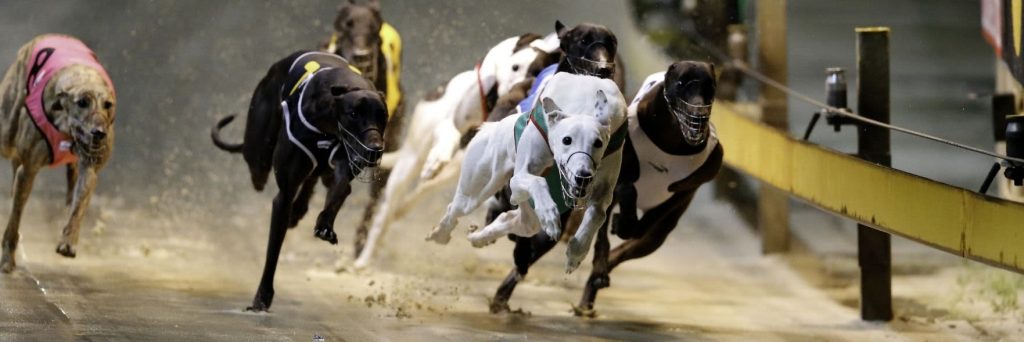 Greyhounds are gentle, intelligent dogs that deserve to be protected from unnecessary harm. However, serious animal welfare concerns continue to exist within the greyhound racing industry, including injuries, deaths and questions about the lifelong welfare of dogs bred for racing. RSPCA WA is committed to advocating for improved welfare standards, greater transparency and stronger independent oversight of the industry.
The welfare issues
Greyhound racing raises serious animal welfare concerns throughout a greyhound’s life. Large numbers of dogs are bred to supply the racing industry, yet not all go on to race. Those who do race are exposed to an ongoing risk of injury and death, while questions remain about the long-term outcomes of some dogs once they leave the industry.
In Western Australia, greyhounds continue to sustain serious injuries, including fractures, and some dogs die as a result of racing. These are not isolated incidents, but predictable outcomes associated with a sport that requires dogs to run at high speeds around a congested track.
There are also concerns about transparency and accountability. The industry is largely responsible for monitoring and reporting on its own welfare outcomes, making independent scrutiny and public confidence difficult. Greater visibility is needed across the entire lifecycle of racing greyhounds, from breeding through to retirement and rehoming.
The solution
RSPCA WA believes there are significant, ongoing animal welfare issues inherent to the greyhound racing industry that must be addressed.
For as long as greyhound racing continues, stronger independent oversight and greater transparency are essential. This includes comprehensive whole-of-life tracking of greyhounds, independent monitoring and public reporting of injuries and deaths, improved rehoming pathways, and measures to reduce the risk of injury both on and off the track.
Animal welfare regulation should be clearly separated from the commercial interests of the racing industry, ensuring welfare decisions are made independently and in the best interests of the dogs.
Ultimately, an industry that depends on animals for sport, entertainment or gambling must be able to demonstrate that animal welfare is prioritised above commercial interests and that serious injury, death and other forms of harm are not accepted as routine or inevitable outcomes.
Mulesing
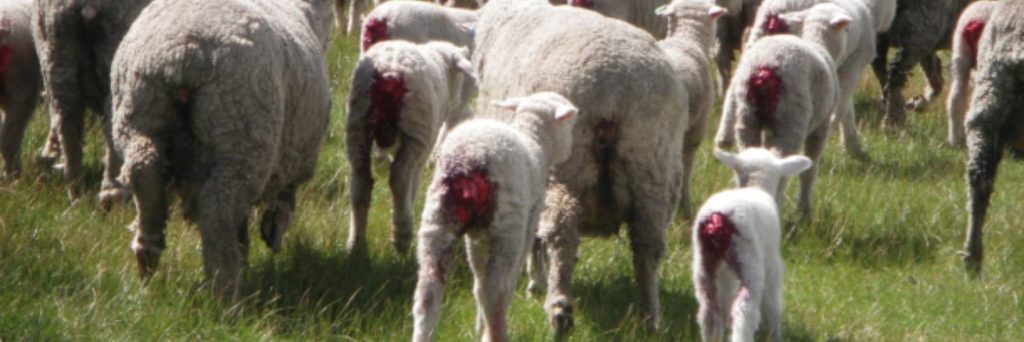 Many Australians own wool products, but few are familiar with the animal welfare concerns associated with it. Mulesing is a procedure performed on some sheep to reduce the risk of flystrike, a serious and potentially fatal condition. While it is intended as a preventative measure, the procedure itself raises significant welfare concerns because it causes pain and distress to the animal.
The welfare issues
Sheep, especially Merinos, have woolly wrinkles and folds in their skin, particularly around the tail and breech area (back and top of hind legs under tail), which can become moist with urine and contaminated with faeces. Blowflies are attracted to this moist area where they lay eggs that generally hatch into larvae (maggots) within 12-24 hours and feed off the flesh of the sheep for up to 3 days. This is called flystrike, which, if left untreated, is fatal.
Mulesing is a painful procedure that involves cutting crescent-shaped flaps of skin from around a lamb’s breech and tail using sharp shears designed specifically for this purpose. The resulting wound, when healed, creates an area of bare, stretched scar tissue. Because the scarred skin has no folds or wrinkles to hold moisture and faeces, it is less likely to attract blowflies. This makes mulesed sheep less susceptible to flystrike in the breech area.
Mulesing is performed without anaesthesia, and pain relief is not always used. The operation is quick; however, the acute pain is long lasting – at least up to 48 hours or from several days to several weeks. The resulting wound bed takes 5-7 weeks to completely heal. Mulesed lambs will socialise less, lose weight in the first two weeks post-mulesing, and exhibit behaviours that indicate they’re in pain.
The solution
RSPCA WA believes the Australian sheep industry must work towards ending its reliance on mulesing by accelerating the adoption of breeding programs that produce sheep less susceptible to flystrike. Continuing to breed animals that require a painful surgical procedure to prevent a foreseeable welfare problem is not a sustainable long-term solution.
While mulesing continues, the welfare of lambs must be protected through the mandatory use of effective multimodal pain relief, including both local anaesthetic and post-procedural analgesia. Combined with improved husbandry and flystrike prevention measures, this approach can help reduce pain and improve welfare while the industry transitions away from mulesing.
Keeping Cats Safe at Home
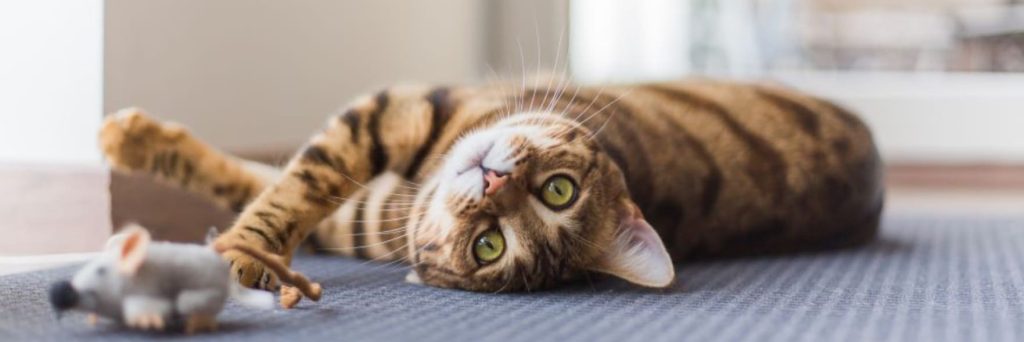 Cats are cherished companions in households across Western Australia, with thousands of families enjoying the benefits of cat ownership. Research shows that living with a cat can support both physical and mental wellbeing, while the bond between people and their pets is often strong and lifelong.
At the same time, responsible cat ownership plays an important role in protecting both cats and our unique WA wildlife. By keeping cats safe at home and ensuring they are desexed, identified and well cared for, we can create better outcomes for cats, communities and the environment.
The welfare issues
Western Australia is home to some of the world’s most unique wildlife, much of which is found nowhere else on Earth. Domestic cats that roam can hunt native animals, placing additional pressure on vulnerable wildlife populations, particularly in urban bushland, coastal areas and regional communities.
Roaming also poses significant risks to cats themselves. Cats allowed to wander are more likely to be injured or killed by vehicles, become involved in fights with other animals, contract infectious diseases, become lost, or create conflict with neighbours.
Research has found that two in three cat owners have lost a cat to a roaming-related incident, with road accidents being one of the most common causes. Keeping cats safe at home is one of the simplest and most effective ways to protect them from these preventable risks.
The solution
The good news is that there are practical, proven ways to improve outcomes for cats, wildlife and the community.
Responsible cat ownership starts with keeping cats safe at home. Cats can live happy, healthy and enriched lives indoors or with access to secure outdoor spaces such as catios, enclosed yards or supervised outdoor time.
Desexing cats before they can breed helps prevent unwanted litters and reduces the number of cats entering shelters and pounds. Microchipping and registering cats help lost cats find their way home and support responsible ownership.
Pig confinement
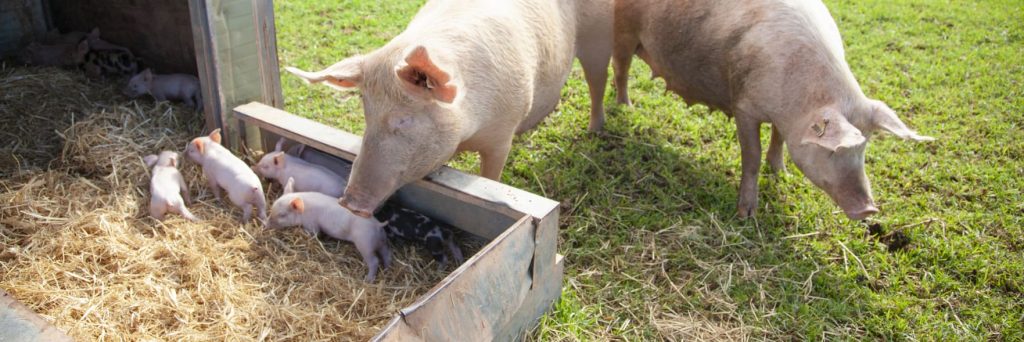 Pigs are intelligent, curious and highly social animals. Studies have shown that pigs are capable of problem-solving, learning complex tasks and forming strong social bonds with other pigs. In natural and free-range environments, they spend much of their day exploring, rooting, foraging, nest-building and interacting with their social group.
Despite this, some pigs farmed for food in Western Australia are kept in intensive indoor systems that severely restrict their movement and ability to express these natural behaviours. RSPCA WA believes that housing systems should meet not only pigs’ physical needs, but also their behavioural and psychological needs, allowing them to express the behaviours that are essential to their wellbeing.
The welfare issues
The most pressing animal welfare issue in pig farming is the close confinement of pigs in barren indoor environments, where there’s no opportunity for these intelligent animals to explore, forage and engage in natural behaviours.
Most sows (mother pigs), boars (male pigs) and growers (meat pigs) are housed indoors on slatted concrete floors with no bedding, litter, or enrichment. Sows are moved in farrowing crates to give birth and remain confined in them for weeks until their piglets are weaned. These crates are used to protect piglets from being crushed accidentally, but their design means that the sow cannot turn around, perform her natural nesting behaviours or bond properly with her young.
Crate systems severely limit the ability to express natural behaviours and means that these highly intelligent and inquisitive animals become bored, frustrated, and distressed and will often resort to abnormal behaviours like grinding their teeth on the metal bars that surround them.
And it’s not just the mother pigs that suffer; shortly after birth piglets are often subjected to painful tail docking (intended to mitigate tail biting). Piglets may also have their sharp needle teeth clipped to prevent injury to sows and other piglets.
Sow-stall-free farming is a positive first step, but since the industry committed to phasing out sow stalls, there’s been few improvements for pig welfare. And, sow-stall-free doesn’t equate to good welfare. Pigs reared in conventional farming systems can still be kept in barren pens without bedding, sows can still be confined to farrowing crates, boars can still be subjected to boar stalls and piglets can still endure painful procedures.
The solution
RSPCA WA believes pigs should be kept in an environment that allows freedom of movement and the ability to express important highly motivated behaviours, including provisions that meet their physical and mental needs.
Farrowing crates should be urgently phased out in favour of farrowing systems that allow sows to move freely and that meet the sows’ and piglets’ behavioural and physiological needs equally. This includes the use of environmental enrichment and bedding to keep their active minds stimulated and encourage nesting behaviour. Sow stalls and individual stalls for boars should also be phased out in favour of group housing for sows and large pens for boars.
Good housing and good husbandry management should also eliminate the need for tail docking and teeth clipping. An environment that offers appropriate enrichment and satisfies pigs motivation to explore and chew reduces the risk of tail biting.
The RSPCA Knowledgebase
Search Australia’s most trusted source of animal welfare science, advice and information, including animal behaviour guidance, pet care FAQs and more than 700 expert articles.
Join our monthly newsletter
Subscribe to stay up-to-date on all things RSPCA WA and animal welfare in Western Australia. Expect the latest news, feel-good animal stories, and more.
Please enter your first name. Please enter your last name. Please enter a valid email address.Thank you for subscribing!
