
What to do if you see a dog in a hot car
If you see a distressed dog in a hot car, report it immediately to the RSPCA Cruelty Hotline on 1300 278 358 or call WA Police on 131 444.
- Identify signs of heatstroke.
- Note down the vehicle’s registration number and location and report it immediately to the RSPCA Cruelty Hotline on 1300 278 358 or call WA Police on 131 444.
- If you’re at a shopping centre, ask the centre management to page the owner of the vehicle by reading out the registration details.
- Keep an eye on the dog until help arrives but maintain a suitable distance to ensure you don’t agitate the dog, which could cause further distress, making the dog even hotter.
- Gather as much evidence as possible (vehicle details, time and date, photos of the dog in the vehicle).
In Western Australia it is illegal to break into or damage someone’s vehicle, including by smashing a window.
Why dogs and hot cars are a fatal mix
Leaving your dog in the car for “just a few minutes” may be too long. Just don’t do it.
The temperature inside a parked car can quickly reach double the outside temperature and kill a dog in just six minutes.
Window tinting, parking in the shade and leaving the windows down provide little or no relief.
Because dogs cool down by panting (breathing in air that is cooler than their body temperature), they can’t regulate their temperature if they are left in a hot car.
When the temperature outside is a mild 22°C, the temperature inside a parked car can rise to over 47°C in a matter of minutes. Dogs in these conditions can suffer an agonising death. The longer you’re away from your car, the more dangerous it becomes.
How each minute impacts your dog
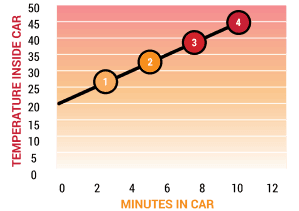 Tests performed by Victoria’s Metropolitan Ambulance Service on a 29°C day, with the car’s air-conditioning having cooled the interior to 20°C, showed that it took just 10 minutes for the temperature to reach 44°C in a parked car. In a further 10 minutes, it had tripled to a deadly 60.2°C.
Here’s how this would impact your dog’s physical health:
1. Cooling mechanisms kick in – around 2 minutes
- Panting and drooling starts.
- Blood vessels dilate.
2. Blood pressure is affected – around 5 minutes
- The heart works harder to supply blood to the dilated vessels.
- Blood starts to pool in organs.
- Blood pressure begins to drop.
3. Organs start to become damaged – around 8 minutes
- Kidney cells suffer thermal damage.
- Small blood clots form, causing more kidney damage.
- The cells lining the intestine and stomach suffer thermal damage, leading to severe bloody diarrhoea and vomiting.
- Tiny blood clots form in the brain and the brain swells.
4. After the body reaches 43°C
- Irreversible brain damage.
- Seizures, coma and death.
Signs of heatstroke in dogs
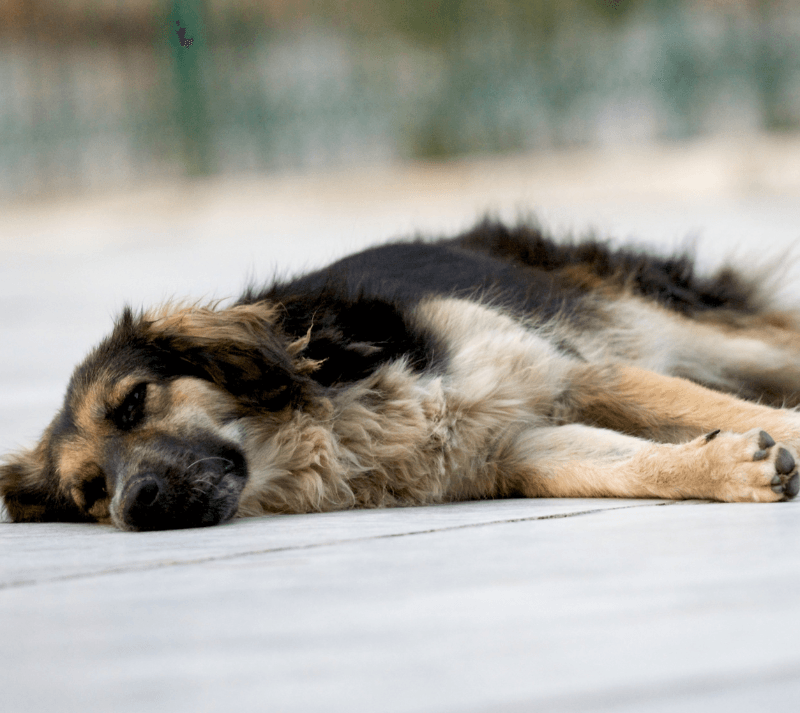
Heatstroke can lead to Disseminated Intravascular Coagulation IC) – a bleeding disorder that can lead to death within hours, or even days, after the dog has been removed from the hot car.
If your dog has been left in a hot car, look out for these signs of heatstroke:
- Rapid panting
- Drooling excessively
- Thick, sticky saliva
- Red or pale gums or bright red tongue
- Vomiting or diarrhoea
- Collapsing
- Appearing lethargic, drowsy or uncoordinated
Dogs at risk of heatstroke
All animals are at risk of heatstroke. However, some dogs have a higher chance of running into serious problems.
Flat-faced dogs (brachycephalic breeds) have serious difficulty breathing because of their short muzzles, which means in hotter weather they can struggle to cool themselves. Brachycephalic breeds are 146% more likely to suffer heatstroke that other dog breeds.
Your dog is also more at risk if they have any of the following characteristics:
- Obese
- A thick/ long coat
- Very young or elderly
- A flattened or shortened faced
- Recently exercised excessively
- Heart or breathing problems
- A neurological disease
- Dehydrated
Treating heatstroke in dogs
Heatstroke is an emergency. If a dog is displaying any signs of heatstroke, move them to a cool, shaded area and call a vet immediately.
For the best chance of survival, dogs suffering from heatstroke urgently need to have their body temperature lowered gradually. You can do this by:
- immediately moving them to a shaded or cool area.
- immediately dousing the dog with cool water. If possible, you can also use wet towels or place them in the breeze of a fan. Don’t use cold water, as this may cause shock.
- allow the dog to drink small amounts of cool water.
- continue dousing the dog with cool water until their breathing starts to settle, but never so much that they begin to shiver.
The effects of heatstroke can cause serious long-term health problems such as organ damage. Damage can continue to happen hours, or even days, after the animal is removed from the hot car, so urgent vet treatment is essential, even if they appear to be recovering.
The legal consequences of leaving your dog in a hot car
It is an offence to confine an animal anywhere, including in a vehicle, where it suffers harm, or is likely to suffer harm.
People who leave their dog in a hot car can be prosecuted under the Animal Welfare Act (2002) and face a maximum penalty of $50,000 or five years’ imprisonment and may be banned from owning an animal for a set period of time.
If you love your dog, leave them at home where they are safe. It’s better to leave them at home for a short time than to lose them forever.